It's 10:47pm. Someone locked their keys in their car in a restaurant parking lot. They're not sitting there patiently researching the best locksmith in their area, reading reviews, comparing prices. They're calling the first result on Google Maps. If you don't answer, they call the second result.
The Highest After-Hours Call Rate of Any Trade
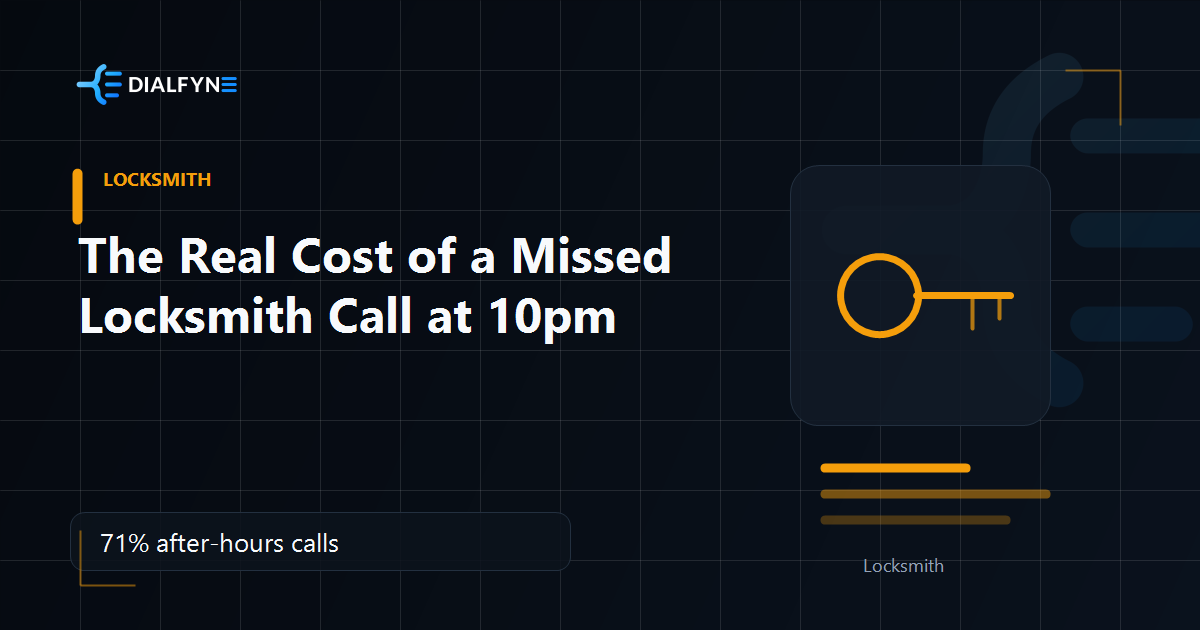
Of all home and auto service industries, locksmithing has the highest proportion of after-hours calls: 71% of locksmith inquiries come in after 5pm or on weekends. If your business goes to voicemail after 6pm, you're not competitive for 71% of your potential call volume.
- Average locksmith job ticket: $165
- Average time per job: 20–30 minutes on-site
- After-hours call rate: 71% (highest of any trade)
- Voicemail abandonment: 97% — locked-out customers call the next result immediately
Sources and Methodology
Locksmith after-hours call volume (71%) is the highest reported rate across home and auto service trades, based on aggregated call tracking data from emergency locksmith operations. Average job ticket values and service time estimates reflect published locksmith pricing surveys. The near-total voicemail abandonment rate (97%) for lockout scenarios is consistent across consumer behavior studies on urgent service needs, where immediate resolution is the primary driver of vendor selection.
What this means operationally
The practical issue is not only that a call was missed. It is that a locked-out caller who needs help immediately had intent in that exact moment and needed a clear next step. If the phone goes to voicemail, the business loses control of the conversation, the caller starts looking elsewhere, and the team is forced into callback mode after the urgency has cooled.
For Locksmiths, better call coverage should be designed around the real workflow. The AI should know what information to collect, what counts as urgent, who should be alerted, and what should wait for the next business day. That is different from a generic answering script, because the goal is not just to take a message. The goal is to preserve the opportunity and protect the customer experience.
How to improve coverage without adding headcount
Start with the call categories your dispatcher already handles every week. Most businesses do not need AI to solve every possible conversation on day one. They need it to handle the repeatable intake: name, contact details, reason for calling, location, urgency, preferred time, and any details that determine routing.
Fyne should be configured around those rules, then tested against realistic caller behavior. A caller may be rushed, frustrated, vague, or unsure what they need. The call flow has to recover gracefully, collect the important details, and escalate lockout calls when the rules say escalation is required.
What to measure after improving call coverage
- After-hours calls answered instead of sent to voicemail.
- New customer or patient inquiries captured with complete contact details.
- Urgent calls routed correctly based on the business rules.
- Follow-up speed from the team after an AI summary is delivered.
- emergency job revenue connected back to calls that used to be missed.
Where most call coverage plans fail
Most plans fail because they treat every caller the same. A routine question, a price shopper, a loyal customer, and a true urgent issue do not need the same workflow. Locksmiths need call handling that can separate intent, urgency, and next step quickly enough that the team can act without sorting through vague messages later.
The second failure point is ownership. If nobody reviews the summaries, updates the FAQs, or checks whether escalation rules are working, the system slowly drifts away from reality. Strong AI reception is not set-and-forget. It is a simple operating process: review calls, update rules, and keep the workflow matched to how the business actually handles customers.
How to make the caller experience feel professional
The caller should feel oriented, not trapped. That means the AI should introduce the business clearly, ask only questions that matter, avoid over-explaining, and give the caller a concrete expectation about what happens next. For a locked-out caller who needs help immediately, speed and clarity usually matter more than a long conversation.
A professional setup also respects boundaries. If the caller needs expert judgment, the AI should escalate or summarize rather than improvise. That honesty is what keeps the experience useful. The business gets coverage, the caller gets a response, and the team still owns the decisions that require human experience.
What should Locksmiths do about missed calls?
Treat missed calls as a process gap, not a receptionist problem. Pull the call logs, identify the highest-value windows, define the intake rules, and cover those windows with a system that can answer consistently.
Can AI handle lockout calls?
AI can handle the first-line intake for lockout calls by collecting details and routing according to your rules. It should not pretend to make expert decisions, but it can make sure the caller is not left waiting for someone to check voicemail.
How should Locksmiths measure AI answering ROI?
Measure captured opportunities, not just answered calls. If one call turns into a booked job, appointment, consultation, or long-term customer, that is the revenue signal that matters.
Related Reading
- AI Receptionist vs. Live Answering Service
- How Much Does an AI Receptionist Cost?
- What to Look for in an AI Phone Answering Service
- Pricing
- Industry page
Turn missed calls into captured opportunities
If your locksmiths team is losing calls outside normal coverage, Dialfyne can help map the workflow and launch AI reception around your real rules. Explore locksmiths use cases at this industry page or compare plans on pricing.