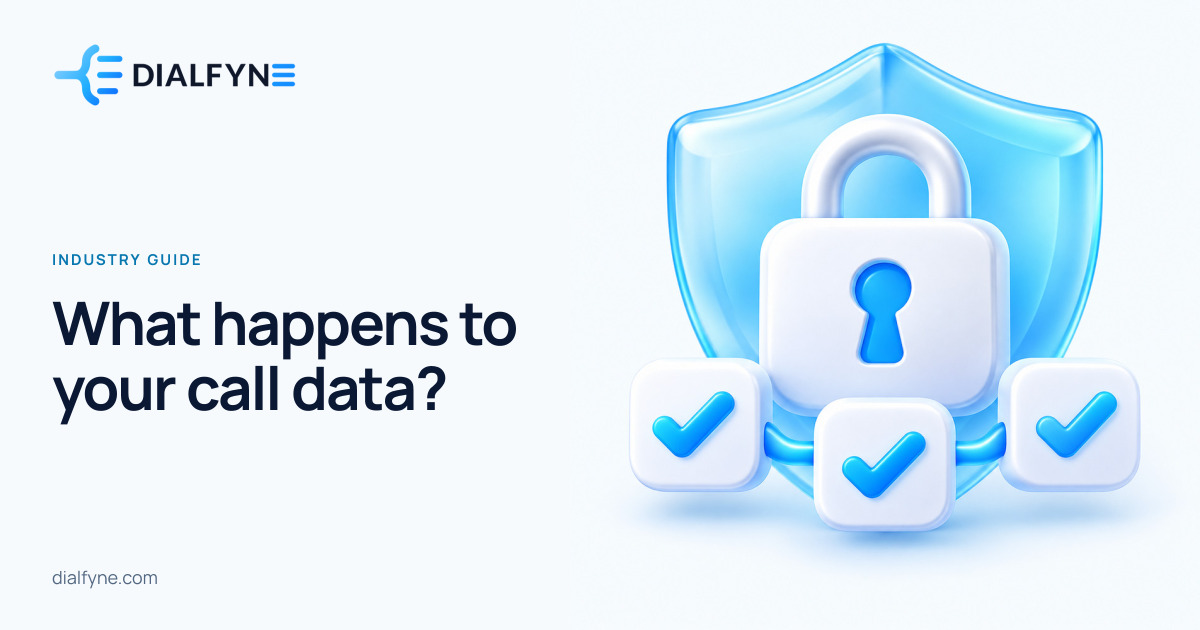
Voice AI creates a new kind of customer data trail. A normal missed call might leave only a phone number. A voice AI session can create audio, a transcript, extracted fields, booking notes, lead scores, call summaries, SMS follow-ups, CRM updates, and analytics metadata. That data is valuable, but it also has to be governed.
The safest way to evaluate a provider is to ask what happens to a call from the moment the caller speaks until the data is deleted. If the answer is vague, the risk is not just compliance. It is operational. You cannot control what you cannot see.
“Short answer: a voice AI provider should explain exactly what data is collected, where it is stored, who can access it, how long it is retained, how it can be exported or deleted, and whether it is ever used to train or improve AI models.”
The data a voice AI call can create
- Call audio and recordings, if recording is enabled.
- Live transcript text and post-call transcript text.
- Caller fields such as name, phone, email, address, service need, urgency, and appointment preference.
- Summaries, tags, dispositions, booking outcomes, and escalation notes.
- Tool outputs from calendars, CRMs, field service systems, SMS, and email.
- Operational metadata such as timestamp, duration, transfer status, source, and agent version.
Retention is a business decision, not a default to ignore
Retention should match the reason you keep the data. A contractor may keep call summaries long enough to confirm booking quality and resolve disputes. A healthcare practice may need stricter retention, access, and deletion procedures. A sales team may want roleplay transcripts for coaching but not need raw audio forever. The wrong default is keeping everything indefinitely because nobody made a decision.
When comparing providers, ask for retention controls by data type. Recordings, transcripts, summaries, extracted fields, and CRM records may not all follow the same lifecycle. Deleting a recording does not necessarily delete the transcript. Deleting a transcript may not delete metadata already pushed to another system.
Security controls buyers should ask for
- 1Encryption in transit and at rest for recordings, transcripts, and customer fields.
- 2Role-based access so only authorized users can view sensitive call data.
- 3Audit logging for call access, exports, configuration changes, and deletion requests.
- 4Configurable recording, transcript, and retention settings.
- 5PII handling or redaction options where sensitive fields are expected.
- 6Subprocessor visibility for telephony, speech, model, voice, analytics, and storage layers.
- 7Clear incident response and support ownership when a call goes wrong.
The model-training question
The most important procurement question is simple: are our calls used to train models? Some providers use customer data only to deliver the service. Some use de-identified or pseudonymized examples for product improvement. Some allow manual review for quality. Some offer opt-outs or enterprise controls. None of those answers should be buried.
Ask about audio, transcripts, summaries, prompts, tool outputs, and metadata separately. Also ask whether your data is used by the provider, by subprocessors, or by model vendors. If the answer changes by plan tier, put that in the contract.
What Dialfyne recommends before launch
- Define which call types can be recorded and which should only be summarized.
- Choose a retention window for recordings, transcripts, and session metadata.
- Limit dashboard access to the people who actually need call details.
- Document who owns call data when the contract ends.
- Confirm export and deletion paths before the first production call.
- Review the provider against a practical buyer guide like What to Look for in a Voice AI Provider.
Related reading
- What to Look for in a Voice AI Provider
- Compliance & Trust Center
- Privacy Policy
- Power dialer for sales teams
- Voice AI Platform vs Managed Provider
Sources and methodology
This guide reflects public provider documentation and pricing/security pages reviewed on June 14, 2026, including Synthflow security and compliance, Goodcall pricing, Smith.ai AI Receptionist pricing, Dialzara pricing, Mindtickle Security & Trust, and Second Nature. Always verify current contractual terms directly with a provider before launch.
The bottom line
Data retention and security are not paperwork after the demo. They are part of the product. The provider you choose should make call data useful without making it uncontrolled, permanent, or unclear.